Home / Blog / Strength training
I Was the Most Consistent Person in the Gym for Years. Here's Why I Had Nothing to Show For It.

By Zoe Schwartz, ACE Certified Personal Trainer and Behavior Change Specialist
· 4 min read
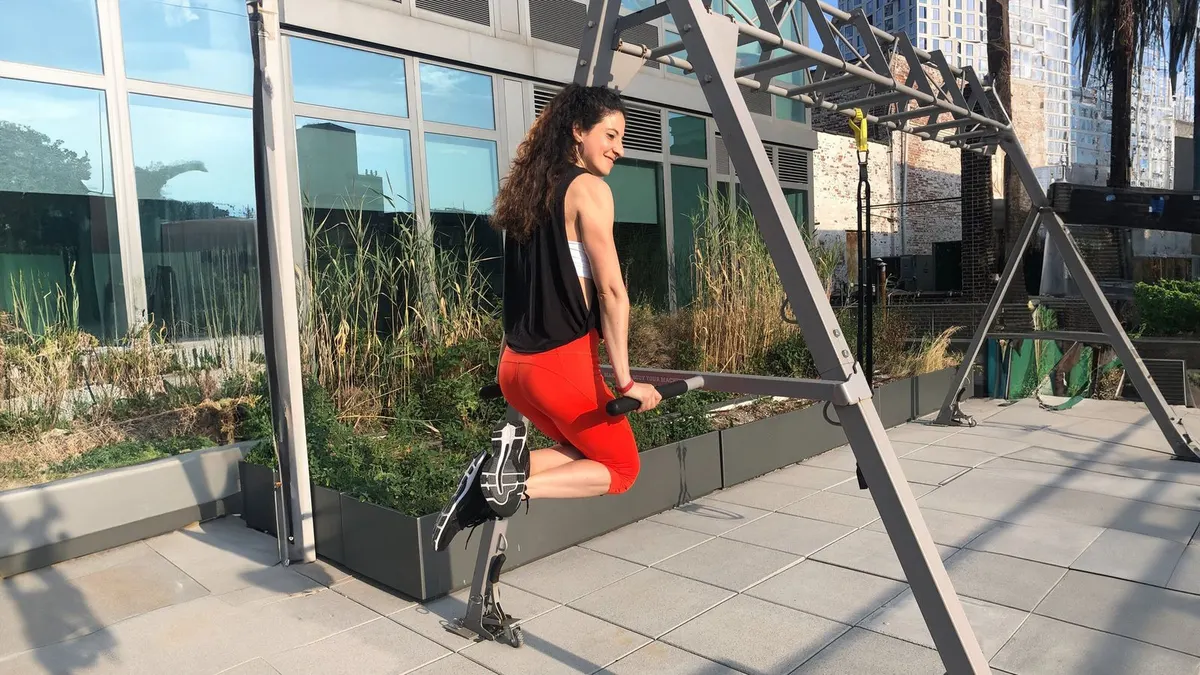
Being consistent with your workouts isn't the same as training effectively. You can show up for years and still not see real results if the programming itself never asks your body to adapt.
My issue was never showing up.
In my early twenties, living in Minneapolis and working in the suburbs (without a car, because I’m a native New Yorker and didn’t grow up driving), a colleague picked me up before dawn so we could train at the General Mills company gym before the workday even started. Minnesota, dead of winter. That's a real commitment. And we still showed up.
During those years, the training itself was simple: mostly long stretches of steady-state cardio, 30 to 75 minutes on an elliptical or treadmill, sometimes with intervals worked in, sometimes just straight steady effort.
It wasn't until later, after I'd left General Mills, moved to Brooklyn, and was working as a Marketing Director at Tough Mudder while building Fitness by Zoe on the side, that my training got more "sophisticated" on paper. It included AMRAP formats, circuit combinations that changed every week, finishers layered on finishers.
Why years of showing up still weren't building anything
Two different training styles, years apart. Neither one actually worked.
Early on, cardio only. It kept me lean and gave me endurance, but nothing about it asked my body to get stronger at anything specific.
The later years included some real strength work, but too much variety and no progressive overload. A lot of the "compound" movements weren't true compound lifts. They were combined movements, like a lunge into a lateral raise. The benefit is it's a "two-for-one," but it requires a lighter weight than either movement could handle on its own, because the lateral raise becomes the limiting factor. You can't lift nearly as heavy working your shoulders as you can in a lunge, so the whole movement gets capped by the weaker link. I was training coordination, and doing things that "felt" like real training, without building strength I could load progressively over time.
I was also doing an enormous amount of high-intensity work with insufficient protein and no structured recovery. Every session was hard. No easy weeks. No deload. No variation in intensity. Just hard, every time, indefinitely.
Part of it was the workouts themselves. Part of it was that my training didn't complement the life I actually had: a demanding job, and later, building a business on the side, on top of a training style that asked for more from a body that already had nothing left to give.
I was slim. But slim isn't the same as visibly strong, and I didn't look like someone training as hard as I was. Morning to night, I felt depleted in a way that had started to feel like it was just who I was.
It wasn't who I was. It was what I was doing.
The myth I didn't know I was chasing
There's a well-documented fitness myth I was living inside without realizing it: the idea that if you're not drenched in sweat, it didn't count. It's genuinely one of the most searched questions in fitness, and certified trainers are direct about the answer: sweat isn't a reliable indicator of how hard you worked or how effective the session was, because it's driven by genetics, age, hormones, and environment, not effort. As one NASM master trainer put it, workout effectiveness depends on progressive overload and proper programming, not perspiration. I was chasing a feeling that had nothing to do with the result I actually wanted.
What finally made my training work
Three things changed, and it took real time to get there, not a clean overnight switch.
I started repeating the same foundational movements instead of constantly relearning new ones. Full body splits, three days a week, plus one play day. Squat, hinge, push, pull, loaded progressively, week over week.
I started eating protein-forward, not just "healthy." I was already eating healthy before. I hear this from clients constantly, so if that's you too, you're not alone in it. Healthy and protein-forward aren't the same thing. I made protein the anchor of every meal instead of an afterthought.
I removed the things that were only in my program for the feeling of a good workout, not because they were doing anything for me. What remained was compound lifting with progressive overload: enough intensity to challenge me, enough recovery to actually perform.
I'm in better shape now than when I got certified over ten years ago. Not because I found something harder. Because I found something smarter, and I stayed with it long enough to let it work.
The bottom line
Consistency is necessary. But once you're actually consistent, the content of what you're doing starts to matter more than whether you showed up at all.
If you want to know what the right structure looks like for your body and your life, let's figure it out together.
Key takeaways
- Sweat isn't a reliable indicator of how hard you worked or how effective the session was.
- Repeat the same foundational movements instead of constantly relearning new ones: squat, hinge, push, pull, loaded progressively, week over week.
- Healthy and protein-forward aren't the same thing.
- Once you're actually consistent, the content of what you're doing starts to matter more than whether you showed up at all.
Quick answers
Why am I working out consistently but not seeing results?
Being consistent with your workouts isn't the same as training effectively. You can show up for years and still not see real results if the programming itself never asks your body to adapt.
Do you need to sweat for a workout to count?
Sweat isn't a reliable indicator of how hard you worked or how effective the session was, because it's driven by genetics, age, hormones, and environment, not effort. Workout effectiveness depends on progressive overload and proper programming, not perspiration.
What should I change if my workouts are not working?
Three things changed for me. I started repeating the same foundational movements instead of constantly relearning new ones, I started eating protein-forward, not just "healthy", and I removed the things that were only in my program for the feeling of a good workout.
Sources
This post is general education from my coaching practice. It is not medical advice. Client stories are individual experiences, shared with care, and are not a guarantee of results.