Athletes Get Coached. The Rest of Us Get Cut.

By Zoe Schwartz, ACE Certified Personal Trainer and Behavior Change Specialist
· 4 min read

If you were never athletic, fitness probably feels harder for you than everyone else. The reason isn't talent or discipline; you were left out before anyone coached you. Strength and coordination are learnable skills at any age, and the women who never got picked usually just need what athletes had all along: a plan, a pace, and a coach in their corner.
When women first come to me, they rarely say "I'm not athletic." They say "I'm not coordinated" or "I'm so clumsy," usually with a little laugh, like they're apologizing in advance. My answer is always the same: oh, I am too, and it's not going to hold you back. I mean that, because I was the girl on the C Squad in middle school.
I played West Side Soccer on weekends from first grade through seventh, and if you'd asked my teammates, they would have told you I was the one talking the whole game. I loved my signature look, one long red sock, one long blue sock, pigtails, far more than I loved the ball. In fact, I didn't really want the ball, because if it came to me I'd have to pass it or shoot it while everyone watched, and I was pretty sure I'd mess it up.
Then came eighth grade preseason. The coaches named a full A team, a full B team with its own sub list, and then a third group that existed only because two of us were left over: the C Squad. We came to every practice, and on game days we were the water girls. I got subbed in exactly once, for about five minutes, and I spent all five of them hoping the ball would go somewhere else.
The other C Squad girl and I stuck it out for the entire season anyway, and that's the part I want you to notice. I wanted to be there. I had been on a soccer field since I was six, but nobody had ever actually taught me how to play: I was just expected to absorb it.
Why working out feels so hard when you were never athletic
Think about the places in your life where you've succeeded. In school, someone taught you. At work, you had managers, mentors and a training program for every new role. Everywhere you're Type A, you were coached: given feedback, structure and a clear next step.
I know how lucky I was here. I had tutors growing up and mentors at nearly every stage of my career, and I know not everyone has those resources.
Fitness is usually the one exception. Kids who show early promise in sports get years of practices, drills and corrections, while kids who don't get cut or quietly stop signing up. Twenty years later, that same woman is handed a gym membership and expected to figure it out on her own, and when it doesn't stick, she decides the problem is her discipline. It isn't. She's trying to do alone what athletes were taught over years.
Being "not athletic" is a coaching gap, not an ability gap
Cross country didn't cut anyone, so freshman year I went there instead. The two-mile warm-up the good soccer players dreaded had been the one part I excelled at. Their punishment turned out to be my whole sport. I ended up becoming captain of the cross country and track teams my junior year, which had as much to do with leadership as speed. I hadn't suddenly become talented. I'd found a format where effort counted, my only task was to run in a straight line, and coaches showed me how to get better.
The research backs up what I lived. When you start strength training, researchers believe your first gains in strength come largely from your nervous system learning to recruit muscle and coordinate movement more efficiently, before your muscles themselves change much (Škarabot et al., 2021). In other words, coordination isn't a prerequisite for lifting. It's one of the first things lifting builds, so if you think of yourself as clumsy, you're not starting behind: you're starting right where training does its earliest work.
Why starting out clumsy can work in your favor
If you're comparing yourself to the woman who played college lacrosse, it makes complete sense to feel behind. But the late starters I coach bring things former athletes often don't: no old personal records to chase, no "I used to be able to," and no habits drilled in decades ago that need undoing. You learn how your body moves on purpose, which tends to make you more aware of it, not less.
Almost every woman who comes to me convinced she's the clumsy one has the same moment once she gets into it: she realizes she could actually be good at this. She sees herself getting stronger, she feels it, her energy is up, and somewhere along the way she becomes athletic without ever setting out to become an athlete.
What athlete-level coaching looks like for women who were never athletes
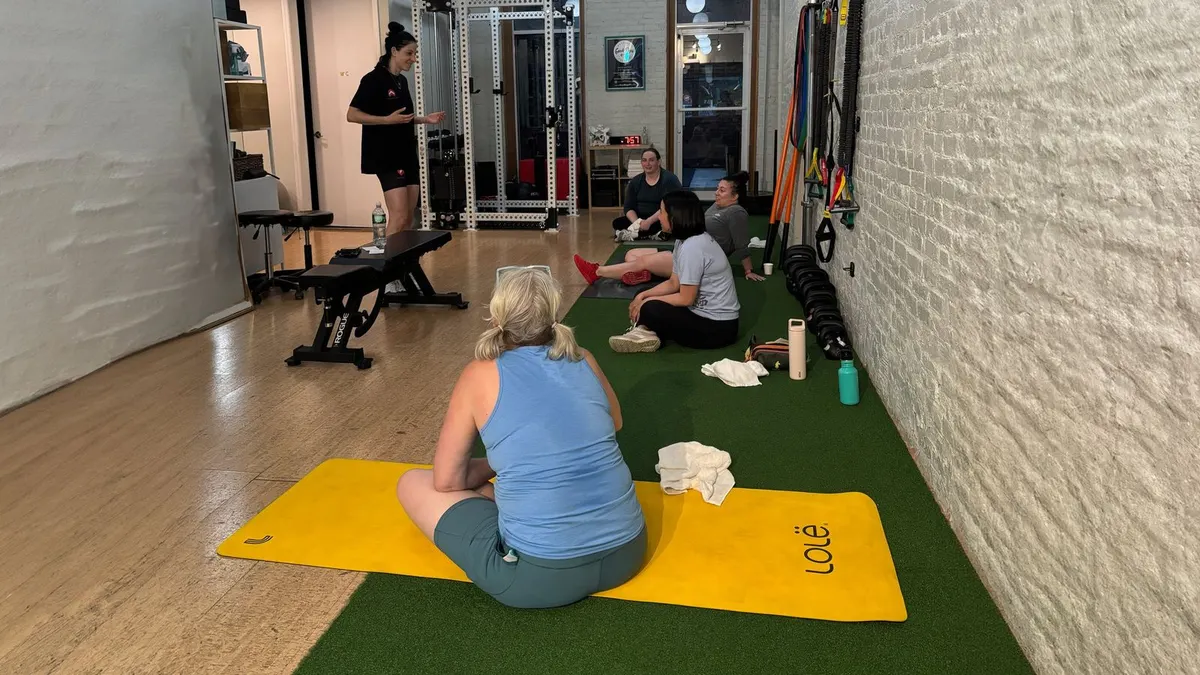
This is the whole philosophy behind how I coach. The women I work with deserve what athletes have always had: a plan built around their body and their schedule, progression at a pace they can actually sustain, form coaching so they're never guessing, and someone who notices when life gets in the way and adjusts. Not a generic program, and not a membership and good luck.
This is bigger than my business, too. One of my long-term dreams is to start a camp for kids and adults who never got picked, so they can finally learn the sports they were shut out of. Once you've been cut, it can feel too late to start, and it isn't.
If you've spent your life feeling like the girl on the C Squad, let's change who's coaching you. Apply for your free Wellness Strategy Session.
Key takeaways
- Strength and coordination are learnable skills at any age.
- She's trying to do alone what athletes were taught over years.
- Coordination isn't a prerequisite for lifting. It's one of the first things lifting builds.
- Once you've been cut, it can feel too late to start, and it isn't.
Quick answers
Why does working out feel so hard if I was never athletic?
The reason isn't talent or discipline; you were left out before anyone coached you. Kids who show early promise in sports get years of practices, drills and corrections, while kids who don't get cut or quietly stop signing up.
Do I need to be coordinated to start strength training?
No. When you start strength training, researchers believe your first gains in strength come largely from your nervous system learning to recruit muscle and coordinate movement more efficiently, before your muscles themselves change much. Coordination isn't a prerequisite for lifting. It's one of the first things lifting builds.
Is it too late to become athletic as an adult?
Strength and coordination are learnable skills at any age. Once you've been cut, it can feel too late to start, and it isn't.
Sources
This post is general education from my coaching practice. It is not medical advice. Client stories are individual experiences, shared with care, and are not a guarantee of results.