Why the Diet Advice You Grew Up With Doesn't Work on Your Body Now

By Zoe Schwartz, ACE Certified Personal Trainer and Behavior Change Specialist
· 3 min read
Eating less isn't the same as eating enough of the right foods. If you grew up in the 90s or 2000s diet culture, you learned only about restriction, not about proper fueling. That gap, not a lack of discipline, is often why "eating healthy" isn't producing the results you're training for now.
A lot of my clients (and me) are elder Millennials who grew up on celebrity diet coverage in People and US Weekly, plus a decade of contradictory food trends: low-fat Snackwell cookies marketed as guilt-free, then Atkins flipping the script to "carbs bad, fat good." Somewhere in there was the advice to eat on smaller plates so you'd naturally eat less.
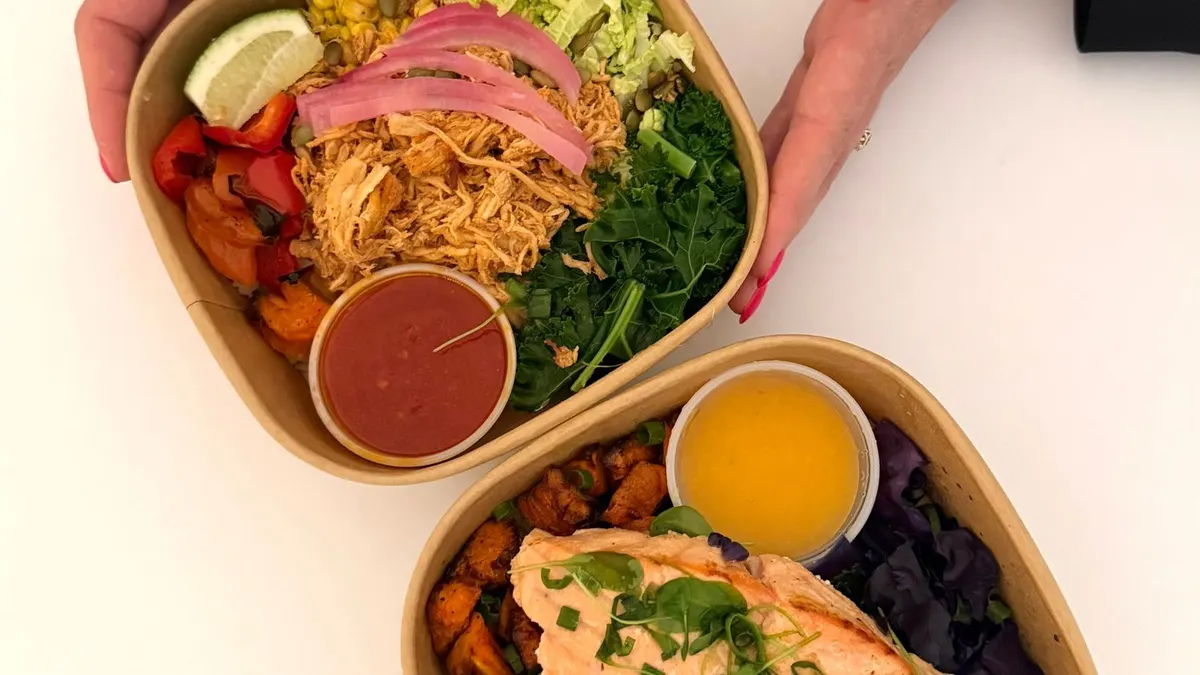
What I've repeatedly seen working with 500+ women over ten years is that otherwise healthy women absorbed "eat less" so thoroughly that they now mistake genuinely inadequate portions, what I'd unscientifically call eating "bird food", for moderation. And it's sneaky, because bird food doesn't look like junk. It looks like salmon with couscous and asparagus, except the salmon is smaller than a palm, the couscous is a few tablespoons, and the vegetables take up most of the plate. Or a two-egg scramble with spinach, which sounds virtuous (my clients use that word a lot), but two eggs is only about 12 grams of protein, there's no carb on the plate, and you've started the day already behind on both counts. Protein targets aren't one-size-fits-all: they're based on your bodyweight, activity level, and goals. For women who are strength training, especially as they get older and muscle preservation becomes more important, the target is typically higher than most people expect, and almost always higher than what a "healthy" breakfast like this delivers. Use this calculator to find your actual number.
And they are exhausted, and not aware that nutrition could be part of the issue.
Why the plate-size shortcut wasn't built for what you're doing now
Most of that generation of diet advice was optimized for one outcome: weight loss through restriction. It wasn't built for living life with the energy and stamina to do anything, from powering through a work week to waterskiing on vacation, and it certainly wasn't built for a 40-year-old woman lifting weights two to three times a week who needs to actually fuel muscle for the physique she's after.
I sometimes use the phrase "lean muscle" or even "toned" with clients because it's familiar language, but worth knowing: all muscle is lean muscle. There is no other kind.
A useful reset, borrowed from the hand-portion method popularized by Precision Nutrition: a serving of protein is roughly the size of your palm, a serving of carbs about a closed fist, and a serving of fat about the size of your thumb. If your plate has less than a palm-sized portion of protein, it's not a full serving — no matter how "clean" it looks.
Your actual range depends on your height, weight, goals, and activity level, but if you've never sat down and estimated it, there's a real chance you're underfed relative to what you're asking your body to do, especially if you're strength training. (I walk through exactly what under-fueling looks like day to day in Lauren's story here.)
Why you don't have to choose between strong and the way you want to look
The goal is to build a body that's strong, capable, and one you feel proud of. I don't believe in choosing between strength and aesthetics — my clients want both, and they can achieve both. That requires eating enough to support training, not just eating "clean" or "healthy" in portions too small to do the job.
You wouldn't put questionable fuel in a car you're counting on to get you somewhere, but somehow it became okay, even required (!), to underfuel your own body.
If you're not eating enough protein and you're not balancing meals and snacks throughout the day in a way that actually works for your life, that alone can be a real source of fatigue.
At least two days a week of strength training at a moderate-to-challenging effort, paired with enough protein and whole food sources to actually support it, is a more useful standard than any of the rules you grew up with.
If you're not sure what "enough" looks like for your body specifically, that's exactly what a first conversation is for.
Key takeaways
- Most of that generation of diet advice was optimized for one outcome: weight loss through restriction.
- If your plate has less than a palm-sized portion of protein, it's not a full serving, no matter how "clean" it looks.
- Protein targets aren't one-size-fits-all: they're based on your bodyweight, activity level, and goals.
- At least two days a week of strength training at a moderate-to-challenging effort, paired with enough protein and whole food sources to support it, is a more useful standard than any of the rules you grew up with.
Quick answers
Why am I eating healthy but still tired?
If you're not eating enough protein and you're not balancing meals and snacks throughout the day in a way that actually works for your life, that alone can be a real source of fatigue. Genuinely inadequate portions can be mistaken for moderation, because bird food doesn't look like junk.
How big should a serving of protein be?
Using the hand-portion method popularized by Precision Nutrition, a serving of protein is roughly the size of your palm, a serving of carbs about a closed fist, and a serving of fat about the size of your thumb. If your plate has less than a palm-sized portion of protein, it's not a full serving.
How much protein do I need if I strength train?
Protein targets aren't one-size-fits-all: they're based on your bodyweight, activity level, and goals. For women who are strength training, the target is typically higher than most people expect.
Sources
This post is general education from my coaching practice. It is not medical advice. Client stories are individual experiences, shared with care, and are not a guarantee of results.