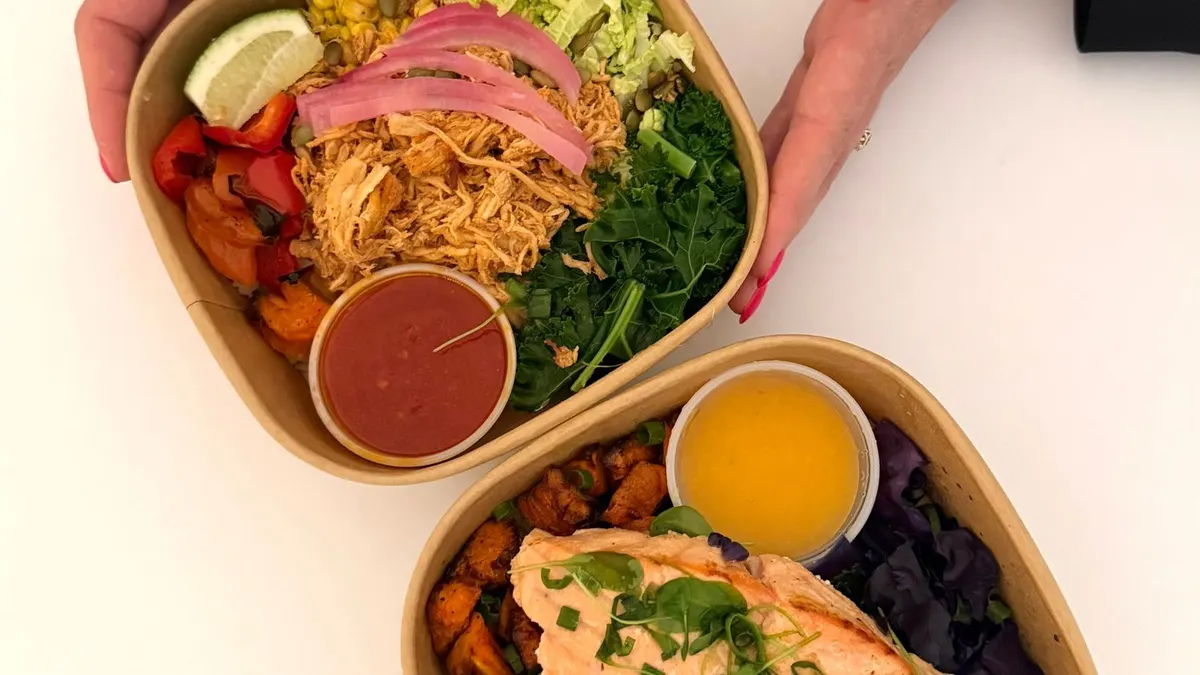
How to Hit Your Protein Goals Eating Fast Food (A Framework I Taught to Teenage Athletes First)

By Zoe Schwartz, ACE Certified Personal Trainer and Behavior Change Specialist
· 5 min read
If you're wondering what to actually order at a fast food chain to hit your protein goals: prioritize grilled protein, add real food like vegetables or fruit, and go easy on the sauces. That core strategy holds at 16 or 46, even though what your body actually needs at each age is different. The honest caveat: fresh food, cooked at home or ordered somewhere that isn't fast food, is still the better default when it's realistic. This isn't a case against that. It's for the fast food chain or the bodega you're actually standing in on a regular Tuesday, not the ideal you're not currently choosing between.
If I could go back and tell my younger self one thing, it would be this: food is fuel. That simple mindset shift can change everything.
Recently, I got to give a version of that lesson I wish I'd been taught: a nutrition talk for a local girls' high school volleyball team, ages 14 to 18, most of them eating fast food constantly between school, practice, and games. I built them a full visual guide. For them, food as fuel meant something concrete: jumping higher, lasting through five sets instead of fading by the third. This post isn't for athletes, and it's not really about volleyball, but the idea translates directly. For you, fueling your day is the same concept aimed at a different court: energy that actually gets you through your day, powers your workouts, and doesn't leave you crashing by 3pm.
The portion framework that works without a food scale
Borrowed from the hand-portion method popularized by Precision Nutrition: a serving of protein is roughly the size of your palm, a serving of carbs about a closed fist, a serving of fat about the size of your thumb, and vegetables get one to two fists, generously. Protein at every meal, not just dinner. No scale, no app, no tracking required to use it.
Why "eat more" means adding to your plate, not cutting things out
Precision Nutrition calls these three categories Eat More, Eat Some, and Eat Less, and the names describe frequency, not a moral ranking or a list of foods to cut out. Eat More is what you build a meal around, first. Add a real portion of protein. Add color, a vegetable, a piece of fruit. Add a side salad instead of defaulting to fries. Once protein and color are consistently the foundation of your plate, the Eat Some and Eat Less categories naturally take up less room, without you ever having to declare a food off-limits.
Eat More. Grilled chicken, eggs, Greek yogurt, beans and lentils, fish, rice, potatoes, oatmeal, fruit, avocado, nuts, olive oil.
Eat Some. A pizza slice, a protein bar, a bagel with cream cheese, a burger. Not banned. Just not what you're building around every time.
Eat Less. Fried everything, sugary drinks, pastries. Nothing here is off-limits forever. It's just not what fuels what you're asking your body to do.
Where to order and what to get instead
You're going to eat out. Order like it matters, because it does, and it's exactly what registered dietitians at Cleveland Clinic recommend too: grilled over fried, sauces on the side, real food added wherever possible.
The swap table below is built around a specific food environment, fast food chains, bodegas, halal carts, the kind of options common in NYC and similar cities. If that's not your everyday landscape, the exact restaurants may not apply to you. The underlying principle does: work with what's actually around you, prioritize protein, and make real swaps instead of aiming for perfection.
| Where | Instead of | Order this | Why it wins |
|---|---|---|---|
| Chick-fil-A | Fried sandwich, waffle fries, lemonade | Grilled nuggets, fruit cup, water | Same protein, none of the fryer |
| McDonald's | Big Mac meal with a large soda | Grilled chicken sandwich, side salad, water | Adds protein and real vegetables, not just more meat |
| Popeyes | 3-piece fried with a biscuit | Blackened tenders, red beans and rice | Skips the batter, keeps the flavor |
| Halal cart | Lamb over rice, sauce all over it | Chicken over rice, salad on it, sauce on the side | Leaner meat, you control the grease |
| Bodega | Bacon, egg and cheese, sugary iced coffee | Egg and cheese on a roll, water or milk | Same price, real breakfast |
| Pizza shop | Two slices | One slice plus a chicken roll or side salad | Adds the protein the slice is missing, and fiber |
| Chipotle | Chips, queso, soda | Bowl: double chicken, rice, beans, fajita veggies | Protein, fats, and carbs, all doing their job |
| Anywhere | Soda, energy drinks | Water, milk, or 100% juice | Energy drinks wreck sleep, and sleep is where you actually recover |
Why hitting three colors a day is enough
Different colors of produce bring different micronutrients and antioxidants. You don't need to overthink this: hitting three colors a day is a reasonable, low-effort target. Red, orange, yellow, green, purple and white. Pick what you actually like and rotate.
Want to actually plan a meal out?
This is general nutrition education, not individualized medical advice. If you want to actually plug in your own numbers and get real suggestions for a specific fast casual restaurant in the US, try the eating-out guide. I'm not a registered dietitian, so check with your coach if you're not sure of your own numbers.
The bottom line
You don't have to eat perfectly. You have to eat enough, consistently, at the places your real life already takes you, and you have to believe food is there to fuel what you're doing, not to punish or reward how you look. That's true whether you're a 16-year-old volleyball player or a 40-year-old lifting weights. I wish I'd learned it decades before I did. I'm glad I get to teach it now.
If you want help building this into your own life specifically, book a free Wellness Strategy Session.
Key takeaways
- A serving of protein is roughly the size of your palm, a serving of carbs about a closed fist, a serving of fat about the size of your thumb, and vegetables get one to two fists.
- Eat More, Eat Some, and Eat Less describe frequency, not a moral ranking or a list of foods to cut out.
- Grilled over fried, sauces on the side, real food added wherever possible.
- Hitting three colors of produce a day is a reasonable, low-effort target.
Quick answers
What should I order at a fast food restaurant to get enough protein?
Prioritize grilled protein, add real food like vegetables or fruit, and go easy on the sauces. Grilled over fried, sauces on the side, real food added wherever possible.
How do I measure portions without a food scale?
Use the hand-portion method popularized by Precision Nutrition. A serving of protein is roughly the size of your palm, a serving of carbs about a closed fist, a serving of fat about the size of your thumb, and vegetables get one to two fists. No scale, no app, no tracking required to use it.
Can I eat fast food and still eat well?
Fresh food, cooked at home or ordered somewhere that isn't fast food, is still the better default when it's realistic. When you are eating out, work with what's actually around you, prioritize protein, and make real swaps instead of aiming for perfection.
Sources
This post is general education from my coaching practice. It is not medical advice. Client stories are individual experiences, shared with care, and are not a guarantee of results.